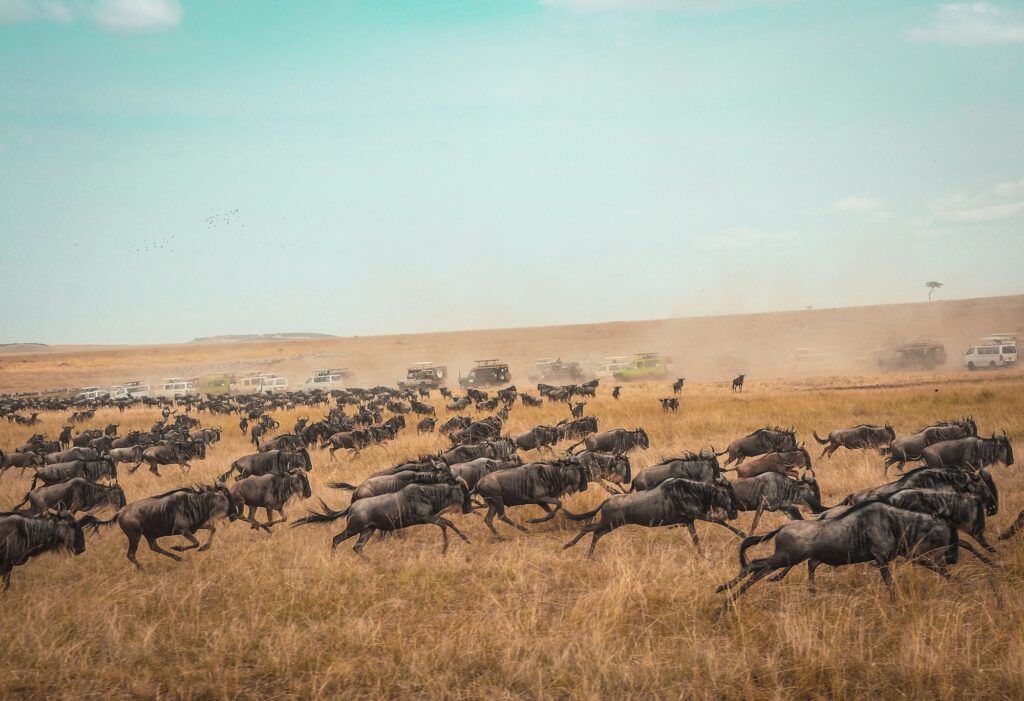
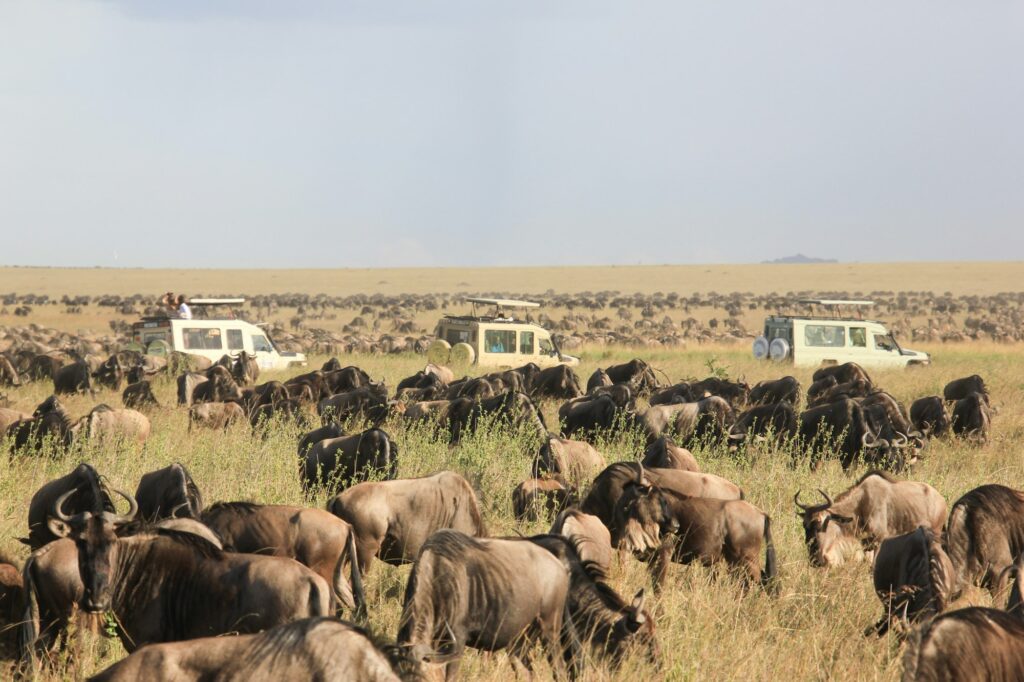
Serengeti National Park is Tanzania’s oldest and most famous national park, known for its open plains, its wildlife and the Great Wildebeest Migration. It covers nearly 15,000 km², holds one of the largest concentrations of mammals on Earth and offers game viewing all year round. It is a UNESCO World Heritage Site and one of the few ecosystems where ancient migration patterns continue largely undisturbed.
History
The area was made a protected game reserve in 1921 and became Serengeti National Park in 1951. Its name comes from the Maasai word Siringet, ‘the place where the land runs forever’. It was listed as a UNESCO World Heritage Site in 1981.
Park regions
- Central (Seronera): the best year-round wildlife viewing and a high density of predators.
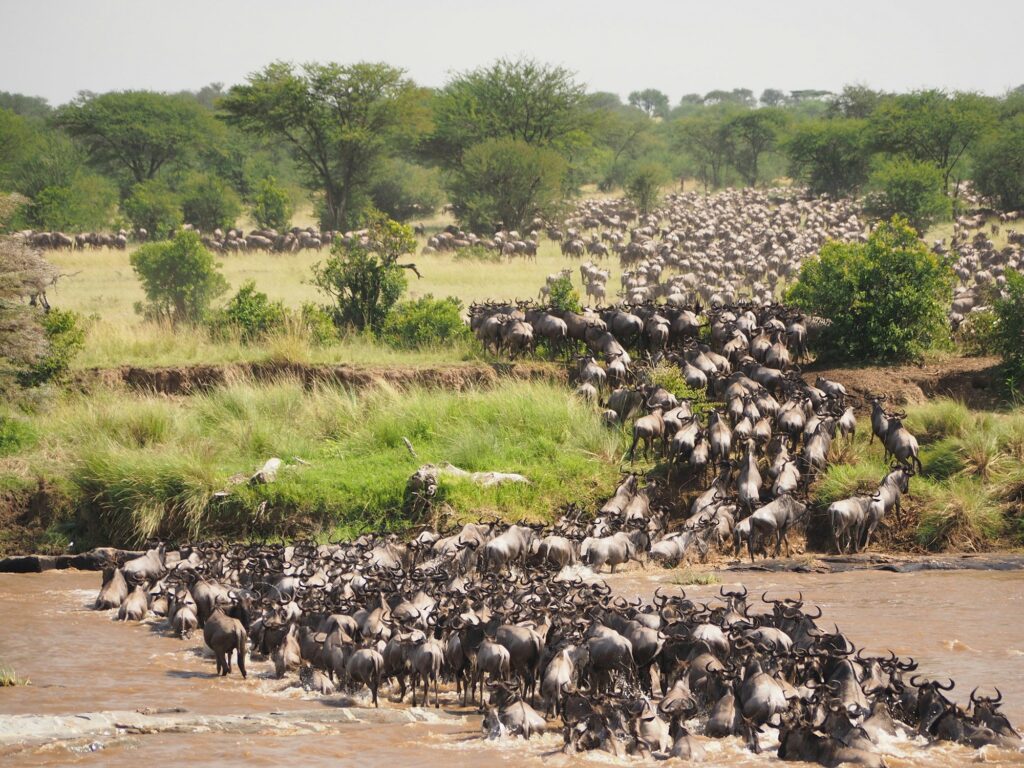
- Northern (Kogatende): Mara River crossings and the Great Migration from July to October, with fewer crowds.
- Western Corridor (Grumeti): Grumeti River crossings, crocodiles and riverine forest.
- Southern (Ndutu): wildebeest calving and predator action on open grasslands.
Wildlife
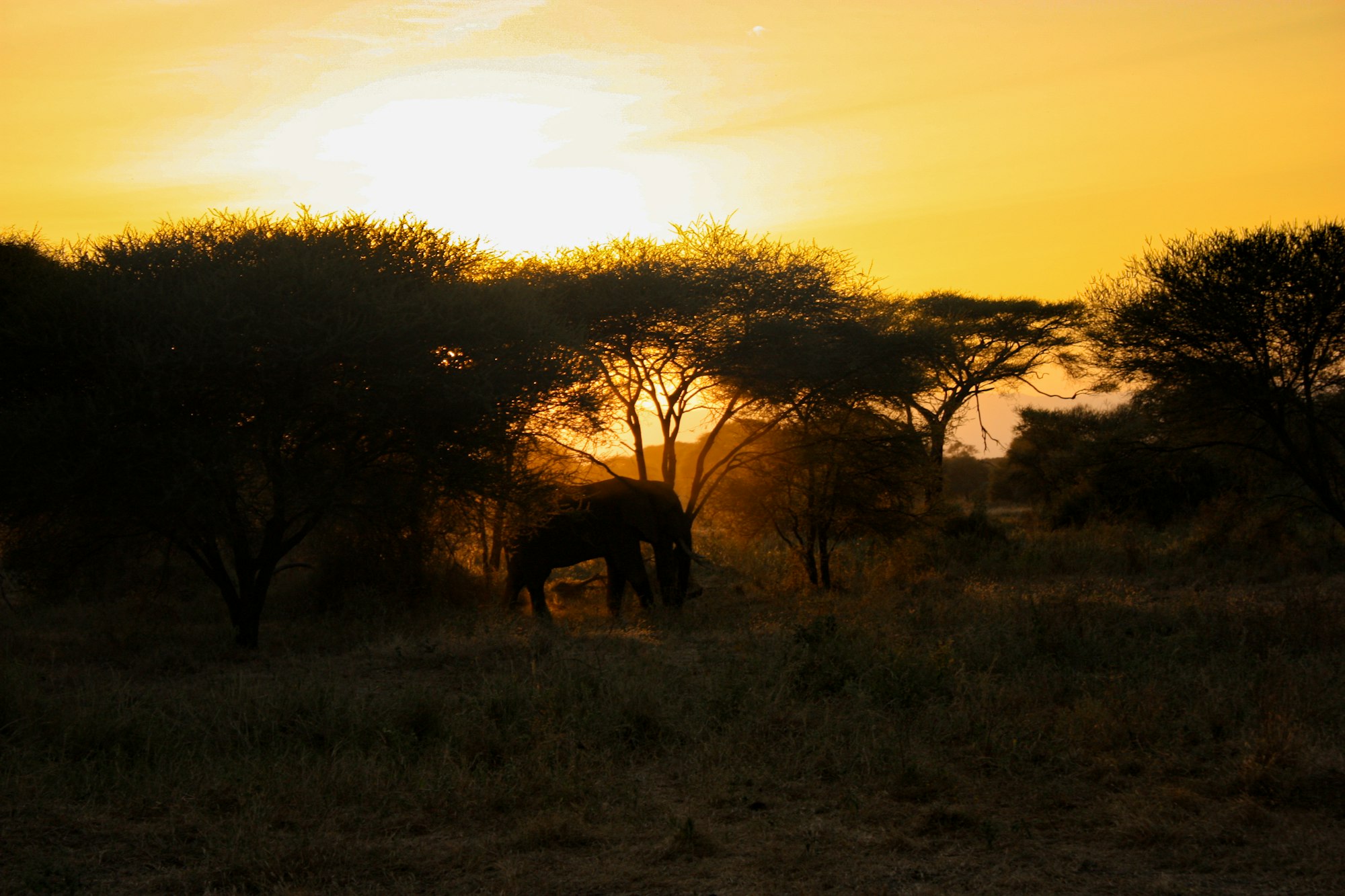
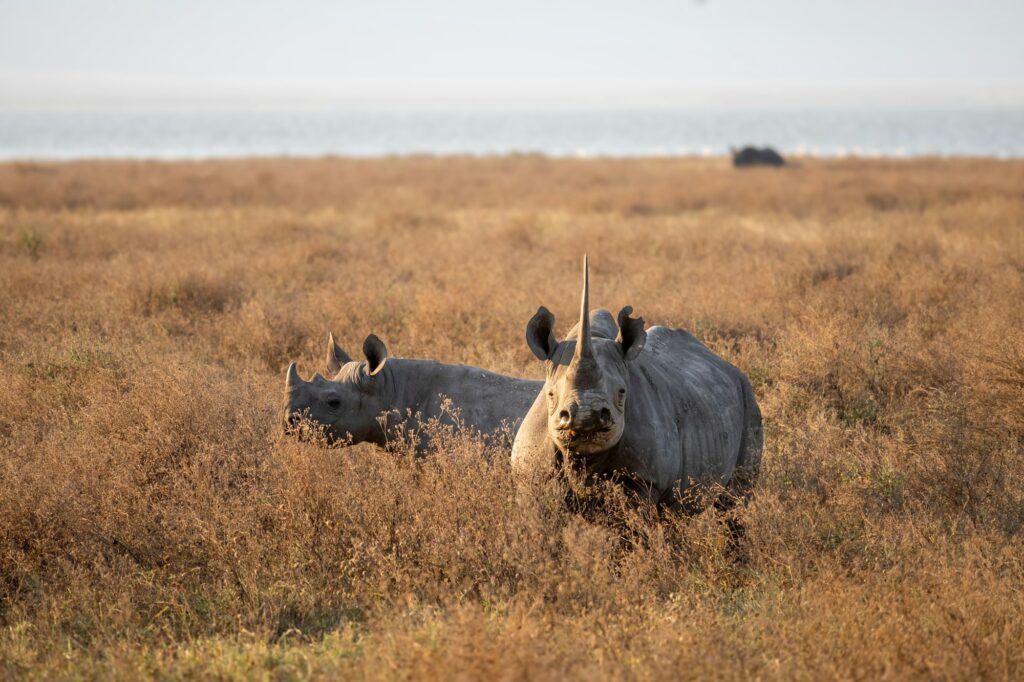
More than two million large mammals live here. Four of the Big Five are easy to find — lion, leopard, elephant and buffalo — with black rhino mainly in protected northern areas. Every year about 1.5 million wildebeest, 250,000 zebras and 500,000 Thomson’s gazelles move through the ecosystem: the world’s largest land migration. Over 70 other large mammals include cheetah, spotted hyena, the rare wild dog, giraffe, hippo, topi, eland, impala, dik-dik, bat-eared fox, caracal and serval, and more than 540 bird species have been recorded.
Getting there
By road, Arusha to the Serengeti takes 7–8 hours via the Ngorongoro Conservation Area. Daily scheduled flights from Kilimanjaro (JRO) and Arusha (ARK) reach the Seronera, Kogatende, Grumeti, Ndutu (seasonal) and Lobo airstrips — ideal when time is short.
Park rules
Stay inside the vehicle except in designated areas, never feed wildlife, keep to the speed limits, keep noise down, take your litter with you, keep a safe distance from animals and follow your guide.