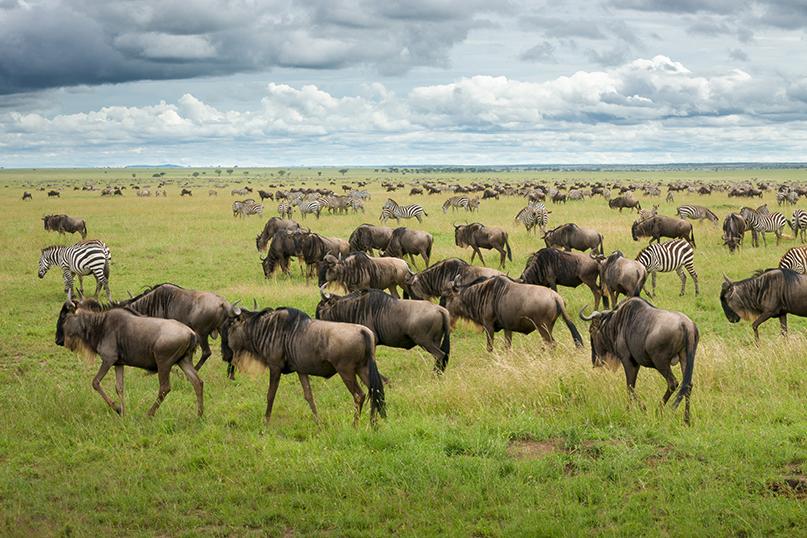
The Great Wildebeest Migration is often called the greatest wildlife spectacle on Earth. Every year, over 1.5 million wildebeest, accompanied by hundreds of thousands of zebras and gazelles, journey across the Serengeti-Mara ecosystem in search of fresh grazing and water. This remarkable movement is not a one-time event—it is a continuous, year-round cycle driven by rainfall and new grass growth.
If you’re planning a Tanzania safari in 2026 or 2027, this guide explains where the migration is likely to be each month, the best places to witness it, and how to choose the right safari experience.
What Is the Great Wildebeest Migration?
The Great Migration is the annual movement of approximately:
- 1.5 million wildebeest
- 200,000–300,000 zebras
- Hundreds of thousands of Thomson’s and Grant’s gazelles
The animals follow seasonal rains across the Serengeti ecosystem in northern Tanzania and Kenya’s Maasai Mara, creating one of the world’s most extraordinary natural events. Because the migration follows rainfall rather than fixed dates, the exact timing varies slightly from year to year.
Great Migration Calendar (2026/2027)
January
Location: Southern Serengeti & Ndutu Plains
This is the beginning of the calving season. Large herds gather on the nutrient-rich short-grass plains where thousands of calves are born.
Best for:
- Baby wildebeest
- Lions
- Cheetahs
- Hyenas
- Wildlife photography
February
Location: Ndutu Plains
February is considered the peak calving season. Thousands of calves are born daily, attracting predators and creating exceptional wildlife viewing opportunities.
Highlights include:
- Predator action
- Newborn wildlife
- Green landscapes
- Excellent photography
March
Location: Southern & Eastern Serengeti
The calves become stronger, and the herds gradually begin moving north in search of fresh grazing.
Expect:
- Massive herds
- Fewer crowds
- Beautiful green scenery
April
Location: Central Serengeti
April brings the long rains. Although showers are common, the migration continues moving toward the central Serengeti.
Advantages include:
- Lower safari prices
- Fewer visitors
- Lush landscapes
- Excellent birdwatching
May
Location: Western Corridor
The herds continue northwest toward the Grumeti region.
This month offers:
- Huge columns of migrating wildebeest
- Dramatic scenery
- Quiet safari experience
June
Location: Western Corridor & Grumeti River
The migration reaches the Grumeti River, where crocodiles wait in ambush. River crossings begin, though they are generally smaller than those seen later at the Mara River.
Best for:
- River crossings
- Predator encounters
- Dry season wildlife
July
Location: Northern Serengeti
By July, many herds reach the northern Serengeti, preparing for the famous Mara River crossings.
This is one of the most popular safari months because of:
- Giant herds
- Crocodiles
- River crossings
- Excellent weather
August
Location: Mara River
August is famous for dramatic Mara River crossings. Thousands of wildebeest plunge into crocodile-filled waters in one of Africa’s most iconic wildlife spectacles.
Expect:
- Heart-pounding crossings
- Large predator populations
- Peak safari season
September
Location: Northern Serengeti
The migration remains in the north, with many opportunities to witness additional river crossings as animals move back and forth depending on rainfall.
Ideal for:
- Wildlife photography
- Luxury safaris
- Big cat sightings
October
Location: Northern Serengeti
As short rains approach, some herds begin moving south while others remain near the Mara River.
Wildlife remains exceptional, with excellent predator sightings.
November
Location: Eastern & Central Serengeti
The migration begins its journey south following the short rains.
Benefits include:
- Lower visitor numbers
- Fresh green landscapes
- Great value safaris
December
Location: Southern Serengeti & Ndutu
The cycle comes full circle as the herds return to the southern plains in preparation for another calving season.
This is an excellent time for travelers seeking:
- Green season photography
- Huge herds
- Comfortable temperatures
- Christmas and New Year safaris
Best Time to Visit Based on Your Interests
| Experience | Best Months |
|---|---|
| Calving Season | January – February |
| Predator Action | January – March |
| Grumeti River Crossings | June |
| Mara River Crossings | July – September |
| Fewer Tourists | April – May |
| Best Overall Wildlife | June – October |
| Budget Safaris | March – May & November |
Is the Migration Guaranteed?
No.
The migration follows rainfall, meaning the exact location of the herds can shift by several weeks each year. While the seasonal pattern is highly predictable, nature does not follow a fixed calendar. Choosing an experienced safari operator increases your chances of being in the right place at the right time.
Tips for Planning a Migration Safari
- Book 6–12 months in advance for peak season.
- Stay in camps close to the migration route.
- Spend at least 4–6 days in the Serengeti for the best chance of seeing the herds.
- Bring binoculars, a camera with extra batteries, sunscreen, and neutral-colored clothing.
- Travel with an experienced guide who tracks wildlife movements daily.
Frequently Asked Questions
How many wildebeest take part in the migration?
Approximately 1.5 million wildebeest, together with hundreds of thousands of zebras and gazelles, participate each year.
When are the famous river crossings?
The most famous Mara River crossings generally occur between July and September, although timing depends on rainfall.
Is the migration only in Tanzania?
No. The migration moves between Tanzania’s Serengeti National Park and Kenya’s Maasai Mara National Reserve, spending much of the year in Tanzania.
How long does the migration last?
It never truly ends. The migration is a continuous annual cycle that repeats throughout the year.
Experience the Great Migration with Goggi Africa Safari
Witness one of the world’s greatest natural spectacles with Goggi Africa Safari. Whether you want to experience the dramatic Mara River crossings, the unforgettable calving season, or a private luxury safari, our expert guides will help you experience the migration at its best.
Ready to plan your unforgettable Tanzania safari? Contact Goggi Africa Safari today and let us create a tailor-made adventure around the Great Wildebeest Migration.