The Great Wildebeest Migration: Why Wildebeest Migrate in Serengeti
Discover the full cycle of the Great Wildebeest Migration across Serengeti and Maasai Mara. Learn why wildebeest migrate, when river crossings happen, and the best time to witness this spectacular wildlife event.
The Great Wildebeest Migration is one of the most spectacular wildlife events on Earth. Every year, more than 1.5 million wildebeest, along with hundreds of thousands of zebras and gazelles, travel across the vast plains of Serengeti National Park in Tanzania and Maasai Mara National Reserve in Kenya.
This incredible journey is driven by the search for fresh grass and water, following the natural cycle of rainfall across the Serengeti ecosystem. The migration covers nearly 1,000 kilometers every year, making it the largest land animal migration in the world.
With expert guides from Goggi Africa Safari, travelers can witness this awe-inspiring phenomenon in comfort and safety.
The Migration Cycle
The Great Migration follows a yearly circular route controlled by rainfall and grass growth. Wildebeest depend on fresh grazing land, so they move continuously throughout the year.
December to March: Calving Season in Southern Serengeti
The migration cycle begins in the southern plains of Serengeti, particularly in the Ndutu area.
Ndutu is known for its vast open grasslands and seasonal lakes, with short nutrient-rich grasses that support mothers and newborn calves.
Highlights of this period:
● Around 500,000 calves are born within a few weeks
● Open plains allow easier predator detection
● Predators like lions, cheetahs, and hyenas are highly active
● Ndutu provides some of the best wildlife photography opportunities in the Serengeti ecosystem.
April to June: Moving North Through Central Serengeti
As rains end in the south, the grass dries up. Wildebeest herds then start moving north through central Serengeti, forming long columns across the plains.
Herds may pass through the western corridor, where they sometimes cross rivers like Grumeti.
Travelers can witness massive moving lines of wildebeest and zebras, a truly spectacular sight.
July to October: River Crossings in Northern Serengeti and Maasai Mara
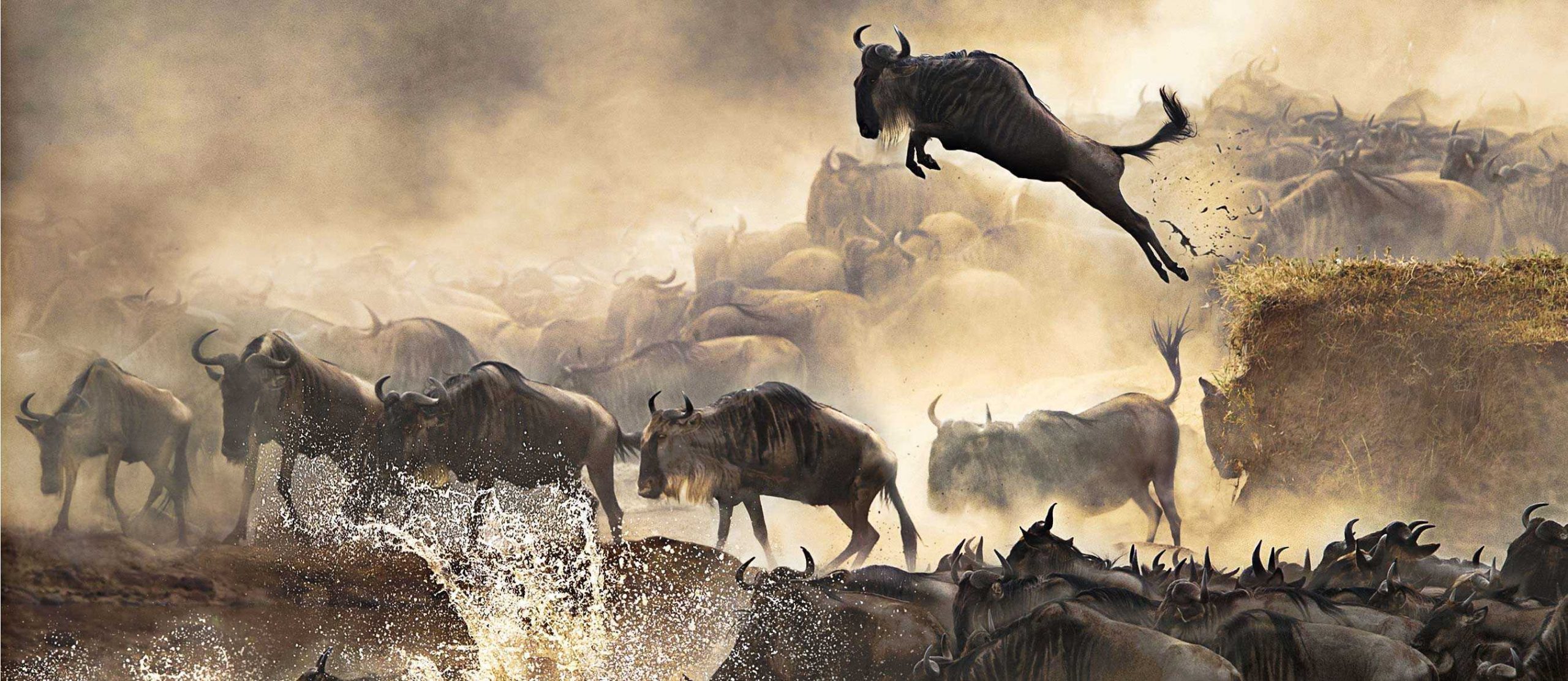
By July, herds reach the northern Serengeti and the Mara River, preparing to cross into Maasai Mara National Reserve.
River crossings are dramatic because:
● Crocodiles await in the water
● Thousands of animals gather at the riverbanks
● Herds move in groups, not all at once, sometimes waiting hours or days
This period is one of the most sought-after safari experiences for wildlife photographers and adventure travelers.
August to October: Grazing in Maasai Mara
Once across the river, herds graze in the lush grasslands of Maasai Mara:
● Abundant food and water during the dry season
● Predator activity is high, providing exciting wildlife viewing
● Opportunities for unforgettable wildlife photography
November: Returning South
With the short rains in November, fresh grass grows in southern Serengeti. Wildebeest instinctively begin their journey south through eastern Serengeti, completing the annual migration loop.
How Do Wildebeest Know When to Move?
Wildebeest rely on natural instincts and environmental cues:
● Smell of distant rains
● Sound of thunderstorms
● Fresh grass growth
● Ancient migration routes passed through generations
This instinctive behavior has guided the migration for thousands of years.
Why the Migration Is Important
● The Great Migration is essential to the Serengeti ecosystem:
Supports predators such as lions, hyenas, and cheetahs
● Provides food for scavengers like vultures
● Maintains ecological balance through grazing
Without this movement, the ecosystem’s natural cycle would be disrupted.
Experience the Great Migration with Goggi Africa Safari
Witnessing the Great Migration in Serengeti National Park is a once-in-a-lifetime experience.
With Goggi Africa Safari, travelers can:
Explore the best locations for river crossings and calving plains (internal link to safari packages)
Plan the trip for peak migration periods (internal link to best time to visit Serengeti)
Conclusion
The Great Wildebeest Migration is a continuous natural cycle driven by rainfall and the search for fresh grass and water. Starting from the Ndutu calving plains, moving through central and northern Serengeti, crossing the Mara River, grazing in Maasai Mara, and returning south, this migration is a testament to the rhythm of nature.
Witnessing it is an unforgettable experience for any wildlife enthusiast, photographer, or safari traveler.

